How the Bank of Korea sets its base rate
The Bank of Korea's Monetary Policy Board sets the base rate. Its decisions feed through to the won, government bond yields and bank lending.
The Bank of Korea (BOK) is the country’s central bank, and its main policy tool is the base rate, the reference rate for its transactions with financial institutions.
Who decides
The seven-member Monetary Policy Board, chaired by the BOK Governor, sets the rate by a majority vote of members present, with at least five attending. It holds eight scheduled rate-setting meetings a year on a calendar published in advance, and can convene extraordinary meetings when needed. After each rate decision the bank releases a statement and the Governor holds a press conference.
What markets watch
Investors compare the statement and the Governor’s comments with their own expectations for inflation, growth and future policy. The minutes, published later, give more detail on members’ reasoning and any dissenting votes. Those signals can move Korean government bond yields and the won even when the rate itself does not change.
Why it matters for foreign investors
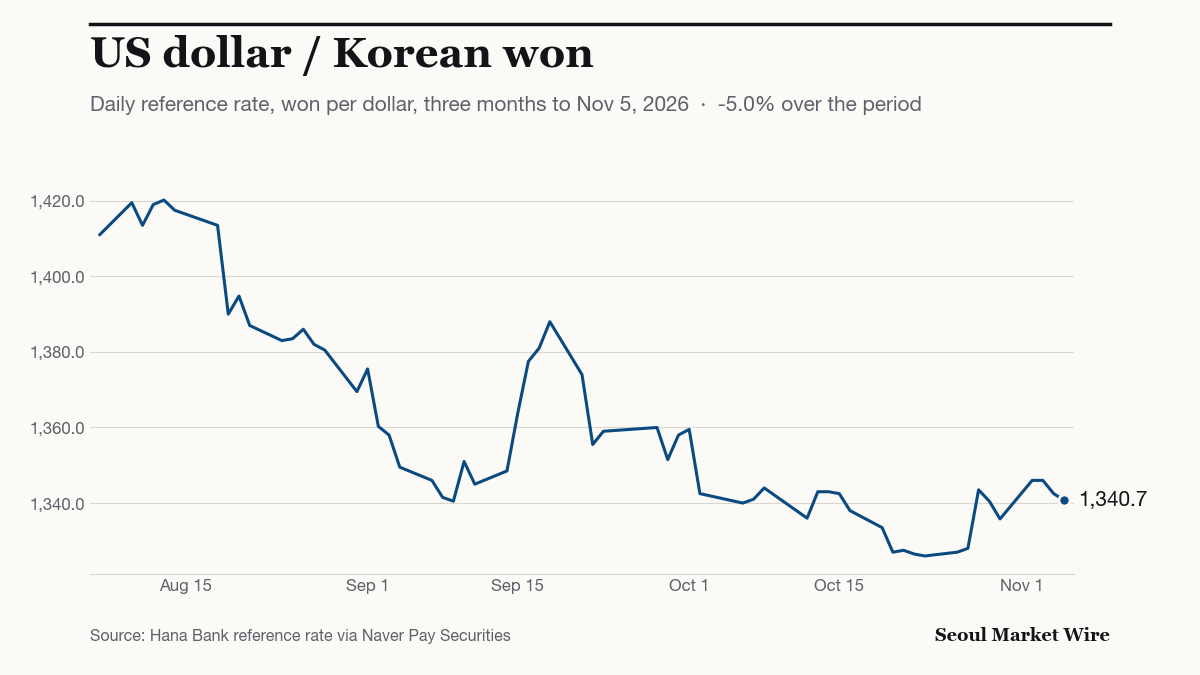
The gap between Korean and US interest rates is one of the factors that traders watch for the won against the dollar. For an investor measuring returns in US dollars, returns on Korean shares reflect both share-price changes and won-dollar moves, unless the currency exposure is hedged.